In view of a future renovation of the Galerie de Paléontologie et d’Anatomie Comparée (the Paleontology and comparative Anatomy Gallery) in the Jardin des Plantes in Paris, the Muséum National d’Histoire Naturelle (MNHN) has assigned us with a mission of architectural and scenographic anticipation to imagine the possibilities of this building, designed by the architect Ferdinand Dutert for the Universal Exposition of 1900. We have come up with a twofold proposal. In this historical part, the intervention that we propose is based on the place’s DNA. To reflect Ferdinand Dutert’s work, we are planning a long-term layout which will acquire a patina over time and will age carefully to become more and more enjoyable. We believe that it would be a mistake to overdo things by proposing an arrogant and overemphasized intervention in such a place. Similarly, the implicit multimedia intervention we propose is designed to go along with the museum narrative and to enhance the existing collection, by underlining some historical aspects, without ever prevailing over the experience. However, the West Pavilion, an extension built in the 1930s with no particular architectural interest, allows us to integrate the Galerie’s extension to accommodate the public. The floors are removed to create a triple-height volume. A structure, similar to the shelving units used for industrial storage, is built vertically in order to absorb both the vertical traffic, the networks, and to contain different spaces such as the museum shop, but also to reveal some of the specimens which are usually kept in storage and not shown to the public. By sliding underneath, striding across, walking in the aisles, the visitor becomes one of the specimens, getting classified, stored among other species, most of them extinct by now.
10/01
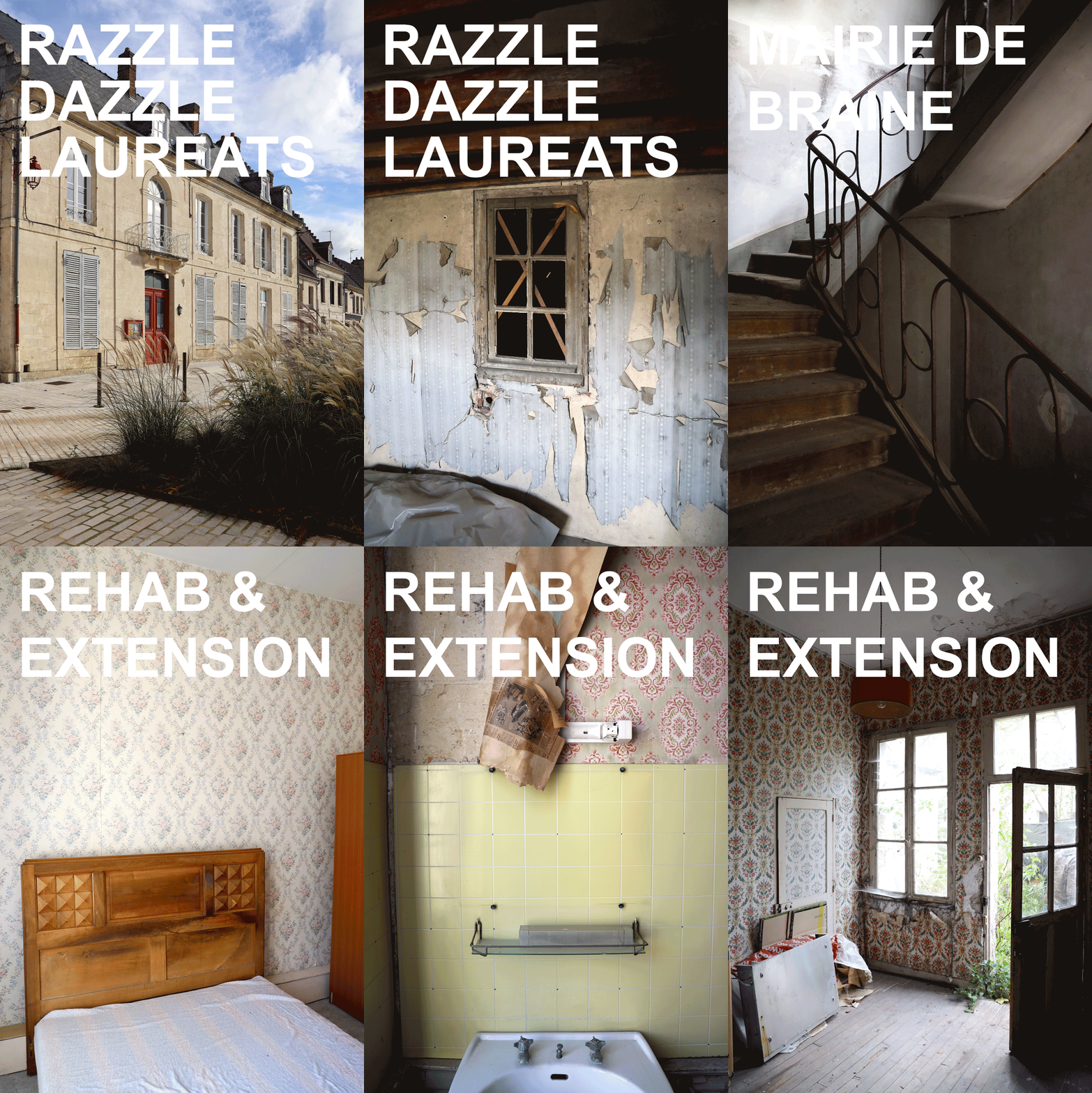
RAZZLE DAZZLE Winners for the rehabilitation and extension of the new Braine Town Hall